

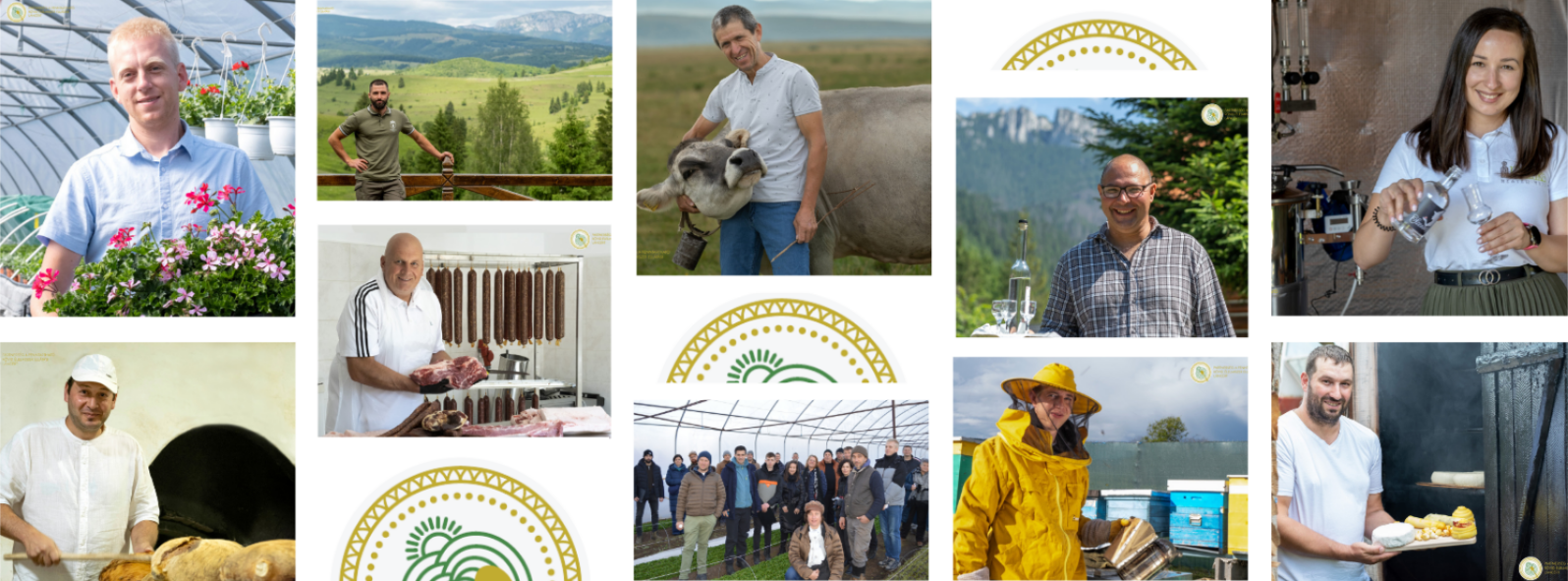
One of the key objectives of the LEAP project is to showcase successful initiatives that strengthen local food systems, support small-scale producers, and bring together producers, hospitality businesses, and consumers.
Within the project, we have collected good practices from Hungary and Romania, highlighting the opportunities offered by short food supply chains through various business models. The selected examples include community-based sales systems, innovative farms, hospitality venues based on local ingredients, producer collaborations, and agri-tourism initiatives.
The stories of these actors clearly demonstrate that developing local food systems is not just an economic matter. Success requires innovation, collaboration, conscious consumers, and entrepreneurs who can adapt to changing market and social conditions.
What can we learn from these good practices?
The videos touch on several topics that represent current challenges for actors in local food systems:
- How to establish direct connections with consumers
- How to run a successful community-based sales system
- How to develop hospitality based on local ingredients
- The benefits of collaboration among producers
- How intermediary organizations can support producers in reaching markets
- How agriculture and agri-tourism can be connected
- How to maintain quality and sustainability over the long term
Our good practices
ROMO – From Producer Directly to Consumer
The ROMO initiative in Brașov is a successful community-based sales model that connects local producers with urban consumers through an online ordering system.
Antal Jersey Farm
The farm exemplifies how innovative production and marketing solutions can be applied in a family-run dairy farm.
Mafinom+ Restaurant
A successful example of gastronomy based on local ingredients and specific consumer needs from Miercurea Ciuc.
Csíkcsomortáni Slaughterhouse
The story of an artisanal meat processing business that prioritizes quality over growth.
Szentábrahám Wonder Garden
An inspiring example of combining herb cultivation with regional development.
Bolvár Biogarden
Bio-intensive vegetable cultivation, conscious planning, and successful collaboration with the hospitality sector.
Farm2Fork
An innovative intermediary enterprise that builds a bridge between producers and restaurants.
Zsankó Farm
Traditional processing, additive-free products, and agrotourism opening at a farm in Zala County, Hungary.
Zala Open Farm Network
An exemplary regional collaboration connecting farmers and visitors.
Valley of Herbs
A good example of diversification and business development based on local assets.
Farm Inn
An inspiring model of hospitality built on local ingredients and a sustainable approach.
Explore the videos!
The LEAP project videos showcase good practices, offering insight into working models that can inspire other farmers, businesses, and local communities. We hope that these examples will contribute to the formation of new collaborations and further development of local food systems in Hungary and the surrounding region.


Funded by the European Union. Views and opinions expressed are however those of the author(s) only and do not necessarily reflect those of the European Union or the European Education and Culture Executive Agency (EACEA). Neither the European Union nor EACEA can be held responsible for them.