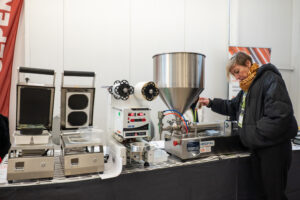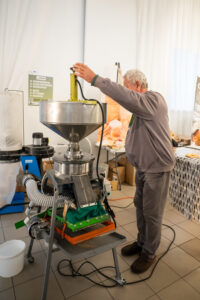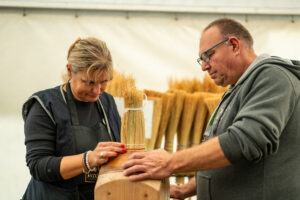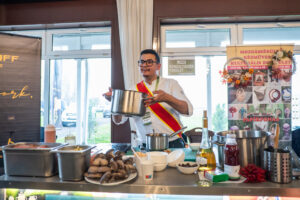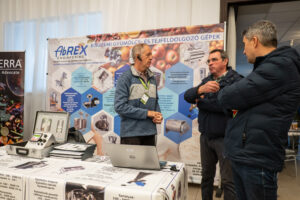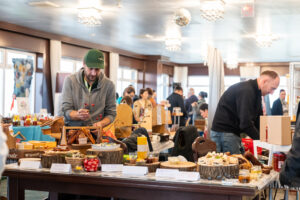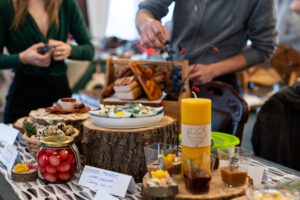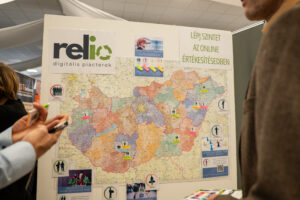

On 13 November 2025, we held the Short Food Supply Chain (SFSC) Expo and Conference in Jakabszállás for the fourth time. The event attracted unprecedented interest: 118 exhibitors presented their products and services, and throughout the day 750 visitors arrived to learn, connect, and be inspired. As in previous years, the central theme focused on strengthening local food systems, empowering small-scale producers and rural enterprises, and showcasing collaborative, resilience-enhancing supply models.
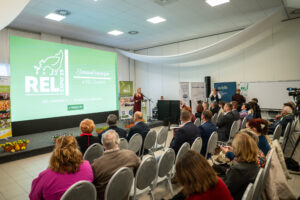
More than a professional gathering, the Expo has become a true celebration of small-scale producers—a vibrant annual meeting where farmers, food artisans, and rural innovators take centre stage. Visitors not only explored an exceptionally rich selection of local products, but also had the opportunity to meet SFSC advisors and mentors, who support producers in market access, cooperation, and the development of short supply chains. Their presence underscored the importance of advisory networks and community-based knowledge sharing in building resilient local food ecosystems.
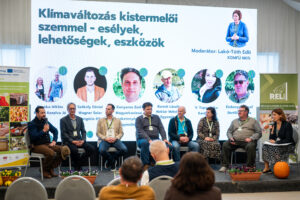
The event placed particular emphasis on the impacts of climate change on agriculture, possible adaptation pathways, the market barriers faced by local products, and the role of digital and innovative sales channels. The professional programme highlighted the development of SFSC channels, the operation of food co-ops and producer collaborations, and good practices from different regions of the Carpathian Basin.
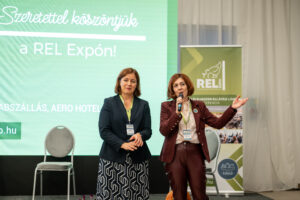
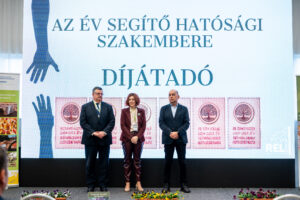
The day opened with a ceremonial welcome, where representatives of the Ministry of Agriculture, the ARCCHAD Interreg VI-A IPA Hungary–Serbia Programme, the Herman Ottó Institute, the National Chamber of Agriculture, Bács-Kiskun County, the Municipality of Jakabszállás, KDMFÜ, and the Kislépték Association greeted participants. Following the opening, the “Supportive Authority Professional of the Year” award was also presented.
The morning professional session featured presentations focusing on reducing the impacts of climate change, supporting small producers, and improving market access. Speakers shared insights from the ARCCHAD project, the challenges of the Homokhátság region, the situation of local products, and producer-oriented tool recommendations.
In the international block, French, Austrian, and Hungarian experts explored the value-creation potential of local products, the significance of terroir, and the power of knowledge sharing. A Q&A session concluded the block, allowing participants to engage directly with the speakers.
Presentation materials are available in PDF format by clicking the titles:
- Supporting Small-Scale Producers in Tackling Climate Challenges – Cross-border Cooperation for Producer Support (ARCCHAD)
Edit Lakó-Tóth, Lead Project Manager - What Lies Ahead for the Homokhátság? Environmental and Social Impacts of Climate Change in the Homokhátság Region
Ádám Szalai, Research Fellow, ELTE Centre for Regional Studies, Great Plain Scientific Department - A Closer Look at the World of Local Products – “I Will Be a Gardener, I Will Grow a Tree”: Opportunities and Directions for Small Producers
Dr. Katalin Kujáni, President, Kislépték Association - Plans and Experiences – Recommended Tools for Small Producers (Climate Change and Digitalisation)
László Lengyel, President, Gardeners’ Association, Zenta - The True Value of Our Food
Zoltán Kálmán, Ambassador, Former Permanent FAO Representative of Hungary, UN Food and Agriculture Organization - Landscapes, Terroir, Local Values – How Does a Local Product Become Valuable?
Ludmilla Djhedri &; Pascal Besson, delegated experts of Planète Terroir France (Algerian and French presenters – in French with Hungarian interpretation) - International Inspiration – Creating Local Value Through Knowledge Sharing Among Producers
Christian Jochum, Agricultural Engineer and Business Consultant (Austrian presenter –in English with Hungarian interpretation)
Recordings of the presentations are being published continuously on our YouTube channel.
Follow our playlist to stay updated on new uploads!
[arve url=”https://youtu.be/TrEhoQ_Rzc4?list=PLL1khB6lpHv9FKthUqltHMPQ_fVQgIOMj” loop=”no” muted=”no” /]
The afternoon roundtable discussions centred on producer experiences related to climate change, the lessons learned from the Open Farms programme, and exemplary gastronomic practices based on local ingredients. The “Vásártál” Tasting Plate showcase in the Gastro Hall offered a unique opportunity for visitors to explore traditional regional dishes and meet the collaborating gastronomic partners.
Throughout the day, several thematic guided exhibitor tours were organised to help visitors navigate the event more effectively and discover exhibitors and their products in a targeted way. These tours supported deeper professional engagement and served as valuable additions to the day’s programme. Professional consultation points—covering taxation, agricultural law, insurance, EPR, and business development—were available all day, providing participants with personalised advice.
The conference was closed by Dr. Katalin Kujáni, President of the Kislépték Association, who highlighted that the SFSC Expo has become an increasingly significant professional meeting point each year: a space for knowledge exchange where producers, institutions, developers, and communities work together to shape the future of resilient local food systems.